



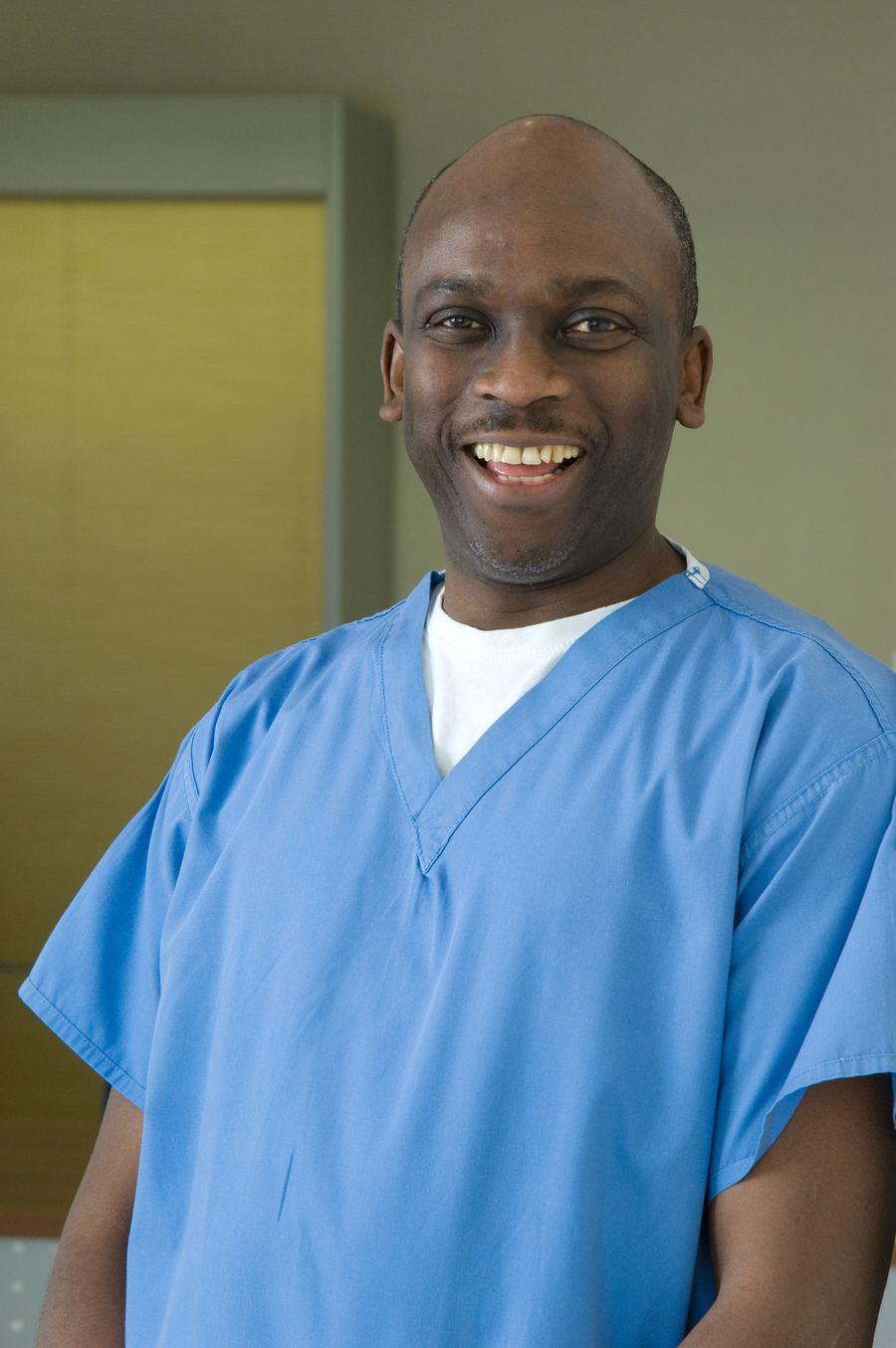
I did not come to dentistry the straight way
Three countries, and two subjects, before I started a dental degree. The long way round is a real way in.
Read moreShow less
I went to secondary school in Nigeria, where Biology was the subject I loved. After that I studied Chemistry for two years, first in the United States and then in the United Kingdom. From there I moved into the life sciences — anatomy, physiology, biological systems — and read Zoology at UCL. I qualified from Turner Dental School in 1999.
The learning did not stop at qualifying either. I worked as an associate, then in an expense-sharing partnership, then opened my own practice in 2008. An MBA followed in 2011, a diploma in endodontic practice in 2013, and an MSc in dental public health in 2022.
So when this page says the long way round is a real way in, that is not encouragement. It is just what happened.
Dr Julius Babayemi, founder of DentiSpark
Reapply with a stronger profile
Most people who miss out. It is the route every other one on this page should be measured against.
Applying again in the ordinary cycle, with achieved grades instead of predicted ones.
How to spend the year (6 steps)Show less
- 1Find out whyMost schools will tell you if you ask. Do this before anything else — every other decision depends on the answer, and guessing at it wastes the year.
- 2Retake the UCAT, and prepare differentlyNot longer, differently. For most reapplicants this is where the marks actually are, and it is the single highest-value thing in the twelve months.
- 3Get paid clinical work if you canA healthcare assistant or dental nurse post beats observational shadowing, because it gives you responsibility to write about rather than things you watched.
- 4Rebuild the list around your real profileSchools weight the UCAT, the interview and academics very differently. Applying to four that all weight your weakest element is a wasted cycle.
- 5Write the personal statement again from nothingReworking last year’s keeps last year’s shape, and the shape is usually the problem.
- 6Check each dental school’s reapplication policySome will not consider an applicant in consecutive cycles. This is school by school, and it has to be checked before your list is final rather than after.
Nothing in the UCAS process penalises a second application. What it buys you is the chance to fix the thing that actually went wrong.
She missed Queen Mary's UCAT cut-off by 88 points, took a gap year and reapplied. On her retake, she got the score she needed.
Her advice is to ask your school. Some schools support former students who reapply, and hers did: it helped with her UCAS application, which you complete as an independent applicant, and with retaking the UCAT. You can still email your teachers for guidance and support.
A degree first, then a four-year BDS
Anyone who wants the most reliable route of everything here, and can take on the extra years and cost.
A first degree, then a four-year BDS. Four programmes at three universities.
Upper second or above in biosciences or an allied health profession degree. No A-level or GCSE requirement listed.
2:1 in a biosciences subject, or a 2:2 plus a postgraduate degree at Merit. No A-level or GCSE requirement listed.
Only for qualified doctors registered with the GMC who have completed Foundation Years 1 and 2.
2:1 in a biomedical discipline, plus three A-levels at grade C or above with at least two sciences, plus GCSE English and Maths at grade B.
Three things the requirements do not spell outShow less
Where one of these asks for an admissions test, that test is the UCAT. No UK dental school uses the GAMSAT. If you have seen it mentioned, it was about medicine, or about a school in Ireland or Australia.
King's A204 is not a general three-year route. It is open only to qualified doctors who are registered with the GMC and have completed Foundation Years 1 and 2.
Lancashire asks graduates for A-levels and GCSEs as well as the degree. A first-class degree does not make up for a GCSE gap, so check your GCSEs against their list before you apply.
Which degree to chooseShow less
Judge it on three things at once: whether it satisfies the graduate-entry requirement, what it leaves you with if dentistry never happens, and where the trap is.
- Meets the requirement?
- Yes at all three universities — the safest fit for both “biosciences” and “biomedical discipline”.
- If dentistry never happens
- Good. NHS laboratory work, research, industry. An IBMS-accredited course keeps the NHS scientist route open.
- Watch out for
- Not every course is accredited. Check before you accept a place.
- Meets the requirement?
- Usually, but the title varies by university and what counts is the bioscience content.
- If dentistry never happens
- Reasonable, broader, less vocational.
- Watch out for
- A broad title can read as less clearly bioscience. Ask admissions before you commit, not in your final year.
- Meets the requirement?
- Yes for Aberdeen and King’s. Lancashire specifies a biomedical discipline, so check that one.
- If dentistry never happens
- Strong, and well understood by employers.
- Watch out for
- Nothing particular.
- Meets the requirement?
- Depends entirely on the modules you take.
- If dentistry never happens
- Good, and flexible.
- Watch out for
- You have to be able to evidence the bioscience content. Keep the transcript.
- Meets the requirement?
- Not established. Aberdeen ask for a first or upper second in a medical or health science, and hygiene and therapy is not among the examples they publish — see below.
- If dentistry never happens
- Excellent, because it is a registered profession in its own right rather than a fallback.
- Watch out for
- Do not assume it counts towards graduate entry. Ask Aberdeen’s Dental Admissions Office directly, in writing, before you commit three years.
Gateway and foundation years
Applicants who meet a dental school's own eligibility rules, which can include a ceiling as well as a floor.
A separate degree with lower entry grades. Four schools run one.
EligibilityShow less
Open only to applicants who attended an aspiring state school, spent time in care, or were eligible for free school meals. There is also a ceiling: applicants predicted or achieving AAB or above, or grade A in Chemistry, are not eligible.
EligibilityShow less
Open only to applicants who attended non-selective state education in a London borough since the age of 11.
EligibilityShow less
For mature students who have been out of formal education and have not completed A-levels. A-level students and school leavers are not considered.
EligibilityShow less
Open to UK students meeting at least three contextual indicators.
The other six ways onto the register
Anyone drawn to the work itself. Choose hygiene and therapy because the work appeals, not as a detour.
Training for one of six other registered professions, each with its own training and clinical independence.
Dental hygiene and therapy students in England can get the NHS Learning Support Fund, £5,000 a year while they train. BDS students cannot.
The one door that may be open: AberdeenShow less
A qualified therapist who wants to become a dentist applies again, in the ordinary way, as a graduate. Aberdeen's own entry requirements ask for a first or upper second “in a medical or health science”. The examples they publish run from Biomedical Science and Physiology to Diagnostic Radiography, Pharmacy and Physiotherapy. A Dental Hygiene and Therapy BSc is not among them, and they do not say whether it counts. Their page tells anyone in doubt to contact the Dental Admissions Office with details of the degree. Ask them, get it in writing, and do it before you accept a place.
Studying dentistry abroad
Read this one twice. It is the route with the loudest marketing and the least visible risk.
A full dental degree outside the UK, then registering with the GDC to work here.
Read moreShow less
EU and EEA dental qualifications are currently recognised by the General Dental Council under post-Brexit standstill arrangements. Those were extended in 2023 for five years — the GDC announced it on 29 June 2023 — so they are due to run until 2028. A five-year degree started in September 2026 finishes around summer 2031; one started in 2027, around 2032. That is the regulator saying it cannot answer the question. Anyone telling you this route is a straightforward way into UK dentistry is telling you something the GDC itself will not.
If a qualification is not recognised, you register by passing the Overseas Registration Exam, run by the GDC, or the Licence in Dental Surgery, run by the Royal College of Surgeons of England. The ORE has two parts, the second a practical clinical examination held over several days. A new contract from September 2026 raises capacity to 2,400 Part 1 places a year. Those places go to dentists already qualified overseas and waiting to register, not to school leavers planning five years ahead.
The money, which is settled. Student Finance England's rules state the course “needs to be in the UK”. So for a full degree abroad there is no tuition loan, no maintenance loan, and no NHS bursary in the final years. The whole thing is self-funded, and since UK nationals lost EU equal-treatment rights on fees, most likely at international rates. The comparison is five years paid in full up front, with an open question about whether it lets you work here, against a longer but funded route at home.
Three things to hold on to
- 1Three plus four is sevenGraduate entry is the most reliable route, and also the longest and the most expensive.
- 2No back door from therapyThere is no published route from hygiene and therapy into a dental degree.
- 32028 is unansweredThe GDC cannot yet say how a degree from abroad finishing after 2028 will be treated.
Check this before you rely on it
Read from the sources below in September 2026. Where any of them disagrees with this page, they are right and we are not.
The 7 sourcesShow less
- General Dental Council — the regulator — registration routes, the Overseas Registration Exam, and the position on EEA qualifications
- Dental Schools Council — entry requirements for every UK and Ireland dental school, including the gateway and graduate-entry routes
- British Dental Association — the ORE and LDS exams, and what they involve
- GOV.UK — student finance eligibility, including where a course has to be
- Office for Students — how many dentistry places England funds each year
- General Dental Council, new ORE contract — Overseas Registration Exam places from September 2026 (added 26 September 2026)
- NHS Learning Support Fund — the £5,000 a year for dental hygiene and therapy students (added 26 September 2026)
Written and checked by Dr Julius K. Babayemi, GDC number 76198.