
We are looking for more than holes in teeth
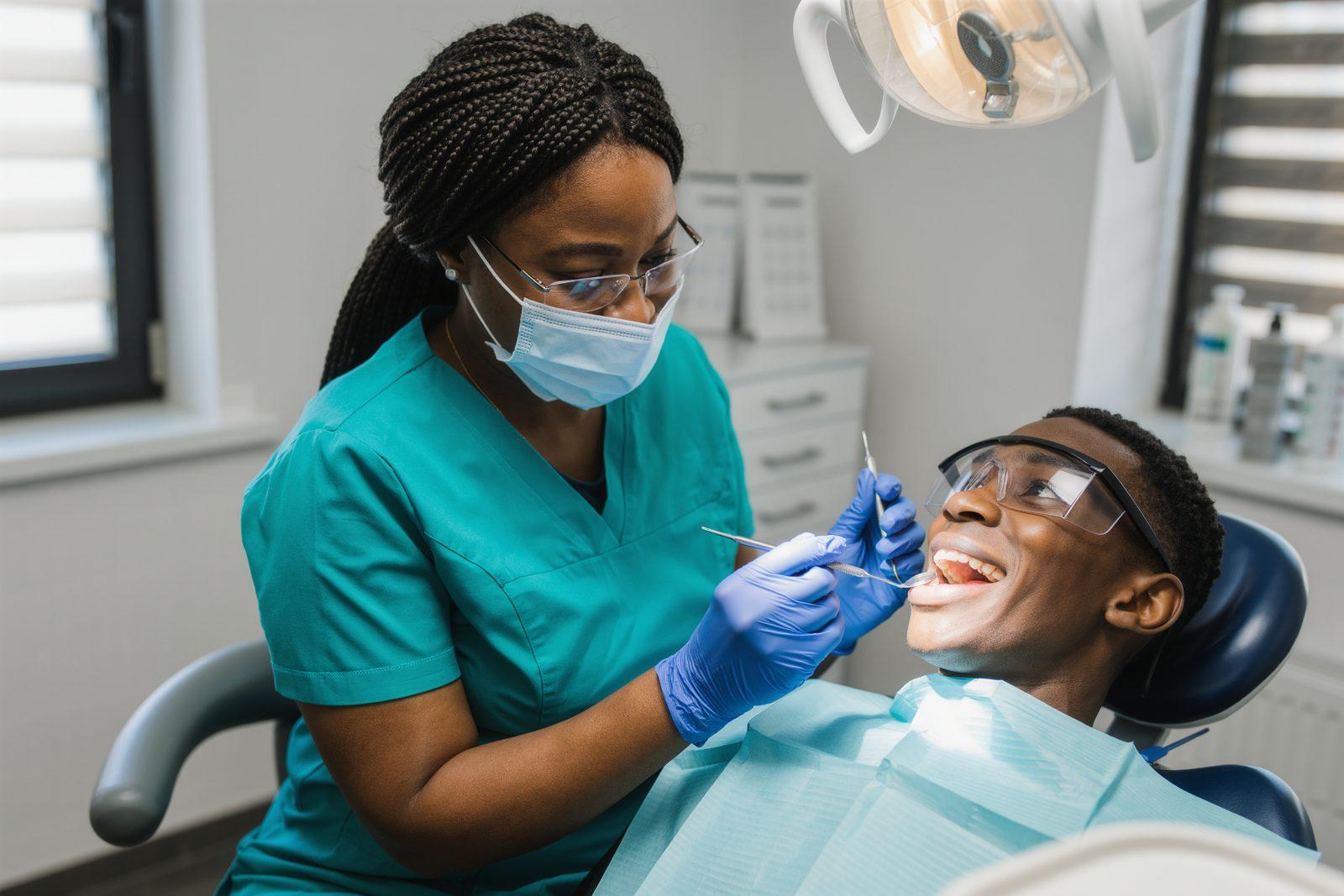
Most people think a dentist looks at teeth. That is a small part of it. I spend my day as an investigator of the mouth — and the mouth tells you a great deal about the rest of the body.
Teeth are the obvious part. But I also examine the soft tissues — the gums, the tongue, the inside of the cheeks, the floor of the mouth. Those tissues show things that have nothing to do with teeth at all.
That is why a check-up is a check of you, not just a check of your teeth.
Seeing what the eye cannot
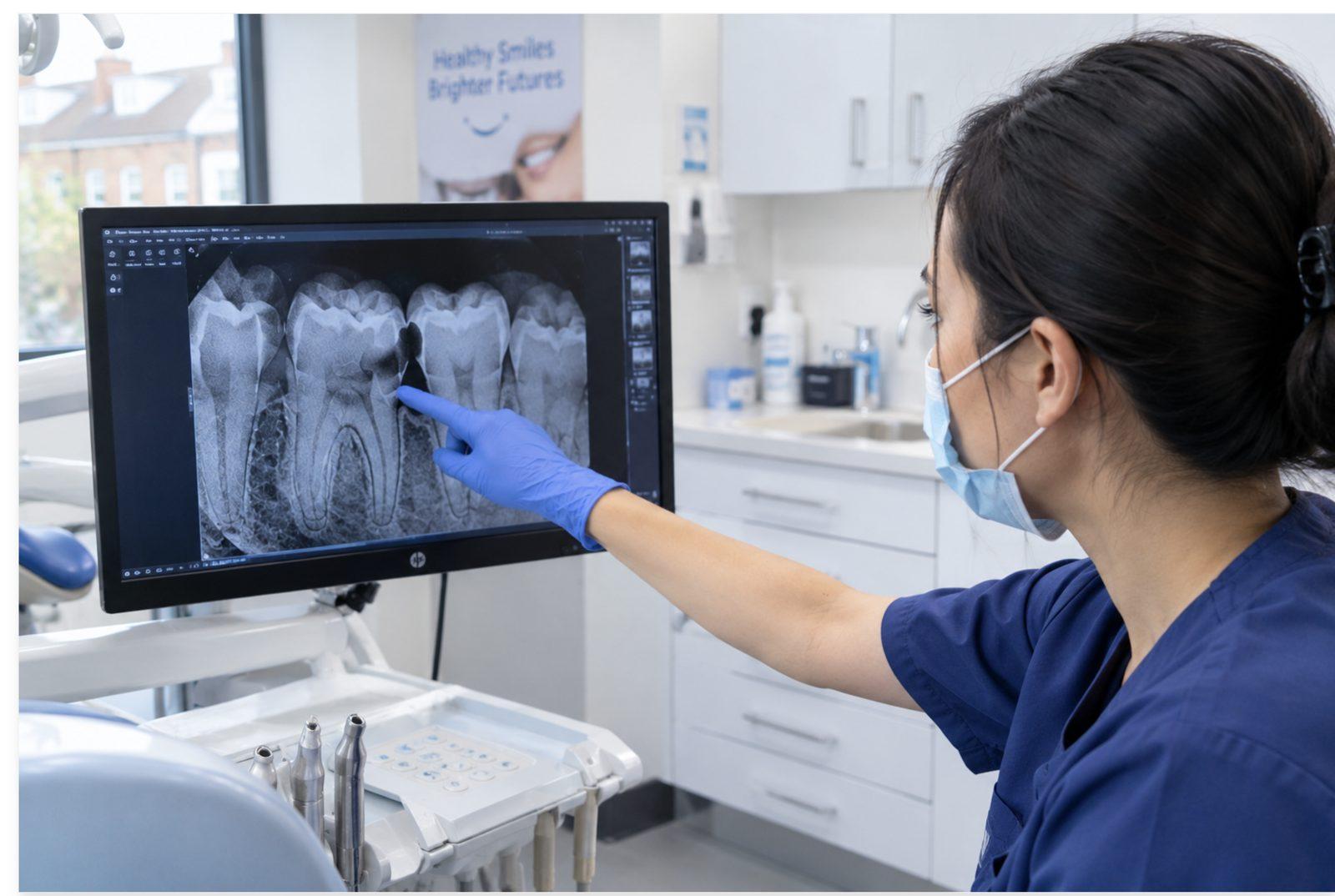
X-rays & 3D scansSome of what matters is hidden. We use digital X-rays and 3D imaging to see inside the tooth or the bone.
Bitewing X-rays
Close-up · the back teethSmall X-rays of the back teeth, taken while the patient bites on a holder. They show decay that starts between the teeth, where the eye cannot see it.
How often depends on the patient’s risk of decay: every 6 months for an adult at high risk, every two to three years or longer for an adult at low risk.
The point of all of it is to find a problem while it is still small. A spot of decay caught early is a filling. The same spot left alone becomes a root canal, or a lost tooth. Almost everything in dentistry is cheaper, quicker and less unpleasant the earlier you find it.
In the UK the law says no X-ray may be taken unless it has been justified: the benefit to the patient must outweigh the risk. What each image is used for, and how often, is from the FGDP(UK) guidance on dental X-rays.
Every procedure is microsurgery
This is the part people underestimate. Whatever the treatment, you are operating on something very small, very precisely, and you rarely get a second attempt.
Rebuilding the shape
Not a plug: it rebuilds the slopes and grooves of the bite. A fraction out, and the patient feels it every time they bite.
Protecting what is left
Not pulling: you work round the roots with as little damage as possible to the bone and gum, because that is what the patient heals with.
The hardest part is not the hands
The most difficult part of the job — and the most rewarding — is the psychology of it.
The people skills, day to day
Lowering the fear
Tell, show, then do, so a frightened patient feels in control.
Making it easier
Slow and gentle, with the patient talked through it.
Without blame
Plain words, the choices and their risks, and no judgement. A patient can only agree to treatment they understand.
At their pace
Children in pain and patients with additional needs, treated with patience.
A dentist is a captain, not a soloist
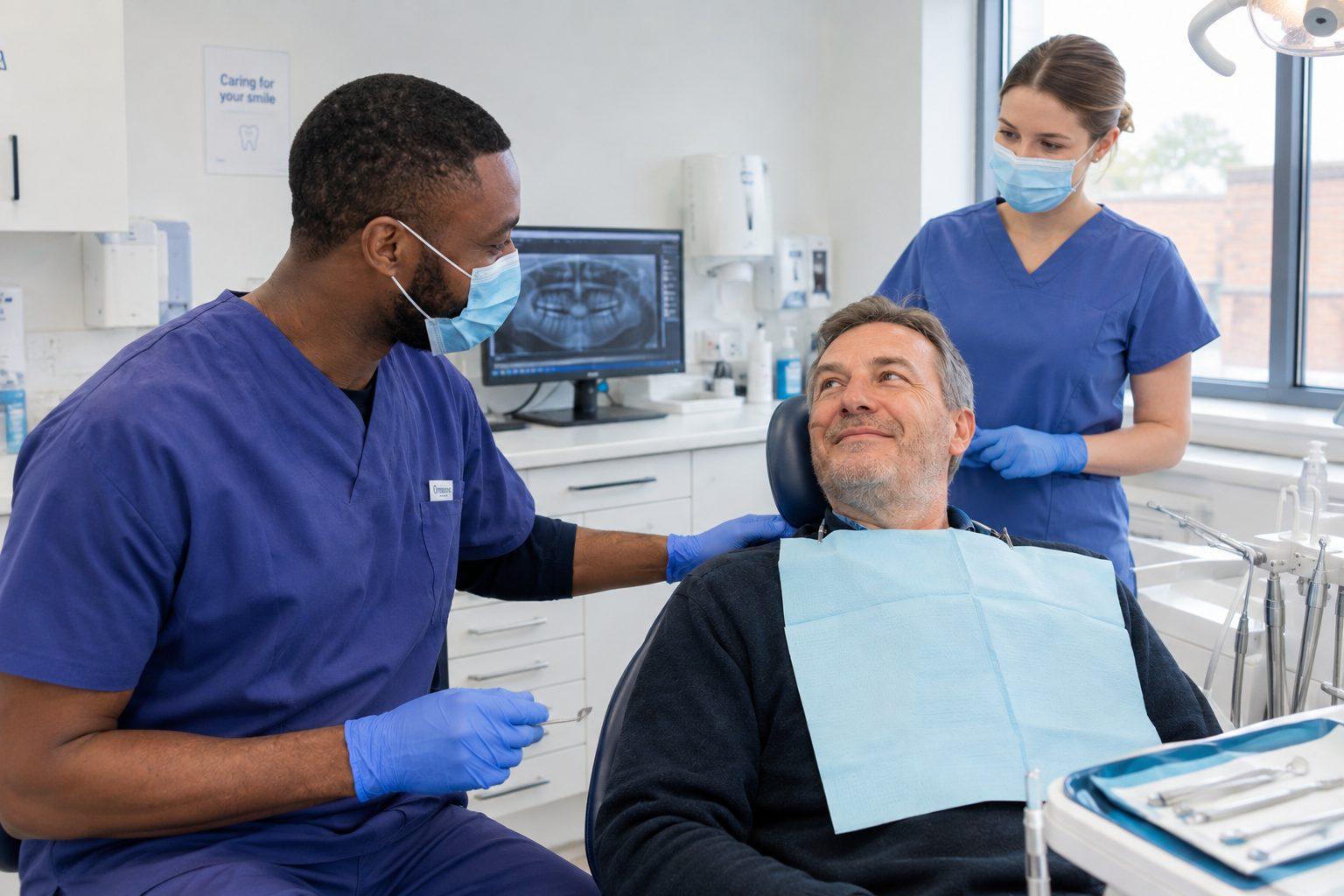
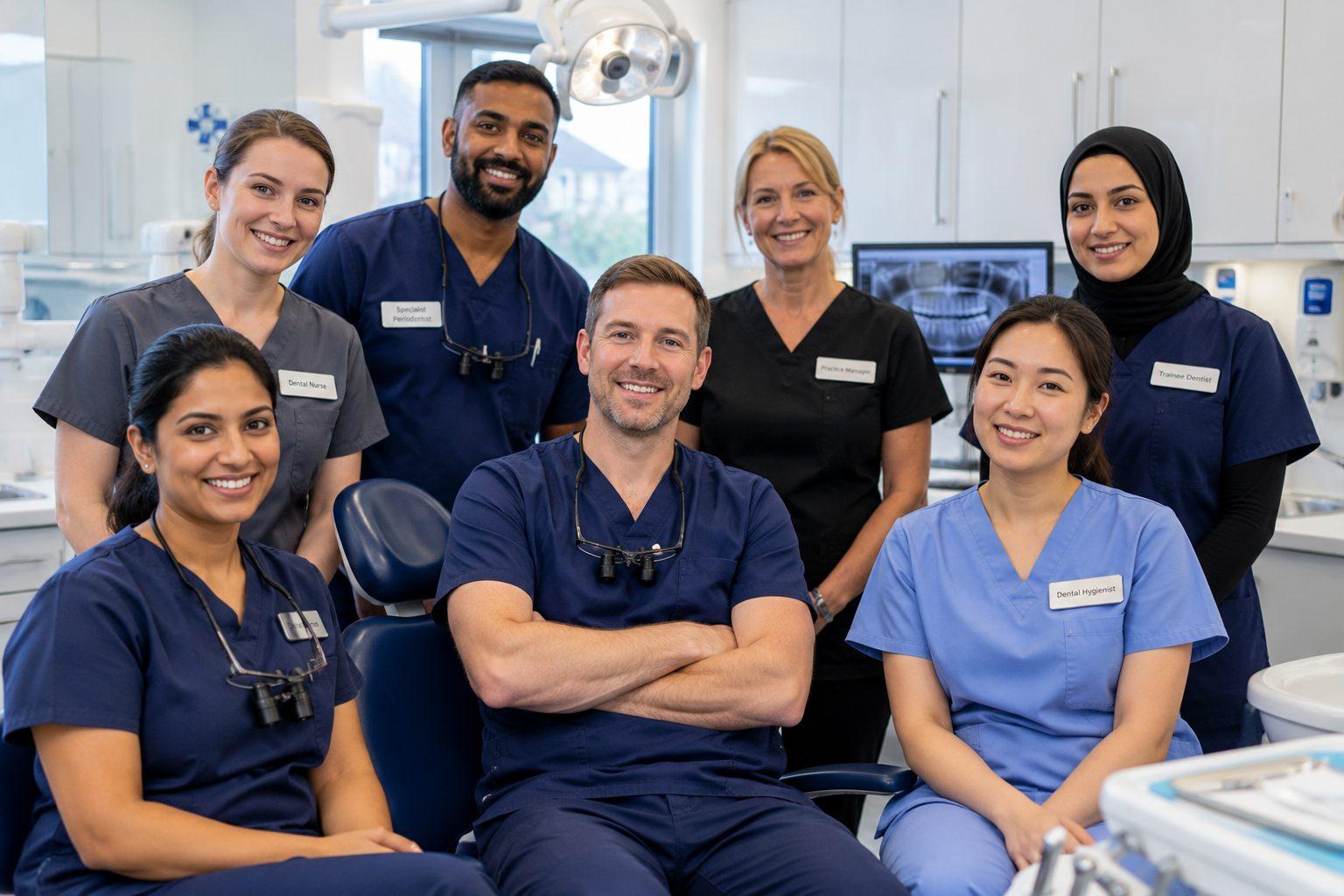
I sometimes describe it as captaining a football team: the captain plays, but the team wins. I work alongside hygienists, therapists, nurses and the front desk, and part of the skill is knowing when a case belongs with a specialist. Referring at the right moment is the job.
Each of those is a real career with its own training route. The Spark pathway introduces all seven jobs in the dental team.
- Dentist
- Dental nurse
- Dental hygienist
- Dental therapist
- Dental technician
- Clinical dental technician
- Orthodontic therapist
A day, as it runs
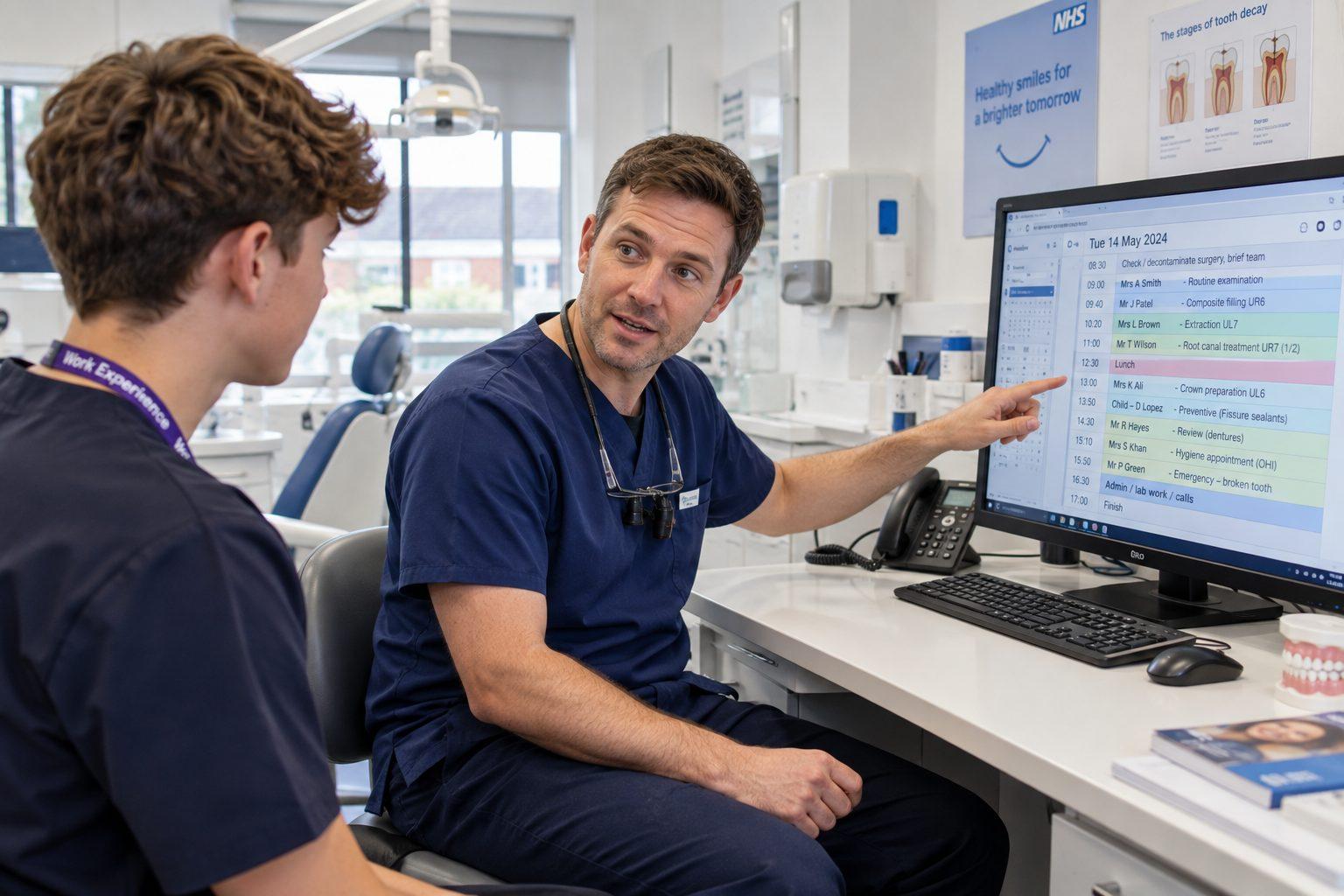
Morning. Check-ups, new patients and emergencies — the person in pain who rang at eight.
Afternoon. The longer work: fillings, extractions, specialist treatment.
Alongside, all day. Patients can see the hygienist without seeing me first (direct access), which leaves me free for the complex work.
Every week, every month. Team meetings weekly, training monthly, including infection control.
Days off. Mostly CPD or a hands-on course. You never stop learning — it is a requirement.
Somebody must keep the standard
A practice is not only clinical work. We hold practice meetings, agree action points and follow them up. We run audits — checking our own work against a standard, honestly, and fixing what falls short.
All of it sits inside a legal and ethical framework that applies to every dental professional in the UK. Nobody does this work on their own judgement alone. How dentistry is governed sets out the regulator, the register and the nine principles every dental professional agrees to.